ACS CONTRIBUTES TO THE UNI ROMA 3 SWIM LAB PROJECT ON THE PHYSICS OF ICE
The laboratory will support the analysis of radar data collected by the ESA JUICE and Europa Clipper missions, currently in transit to Jupiter's icy moons—Europa, Ganymede, and Callisto—with the aim of detecting water in their crusts and identifying possible extraterrestrial habitats.
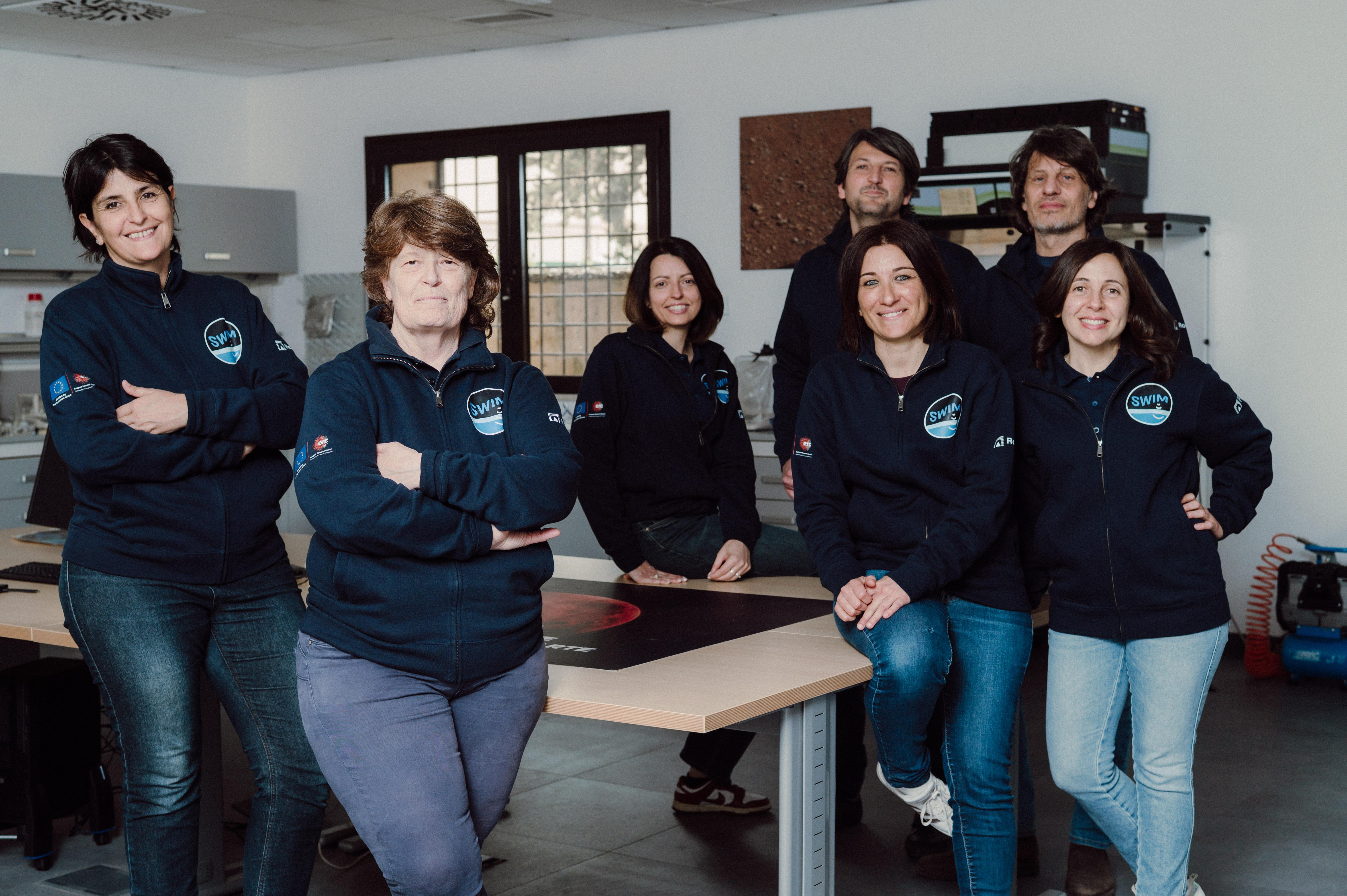
On December 17, 2025, we were invited at the Department of Mathematics and Physics of the Roma Tre University SWIM Lab, a European center of excellence dedicated to the search for extraterrestrial liquid water and the identification of environments potentially favorable to life. They selected us as a partner in an ambitious project: to investigate whether Jupiter's icy moons contain the water necessary for life.
The laboratory will support the analysis of radar data collected by the ESA JUICE and Europa Clipper missions, currently traveling towards Jupiter's icy moons—Europa, Ganymede, and Callisto—with the aim of detecting water in their crusts and identifying possible extraterrestrial habitats. The ability to correctly interpret these data depends on accurate knowledge of the dielectric properties of ice, which are still poorly understood. Filling this gap is one of the main objectives of the SWIM project, which will develop new experimental protocols based on experience gained in the dielectric characterization of planetary analogues.
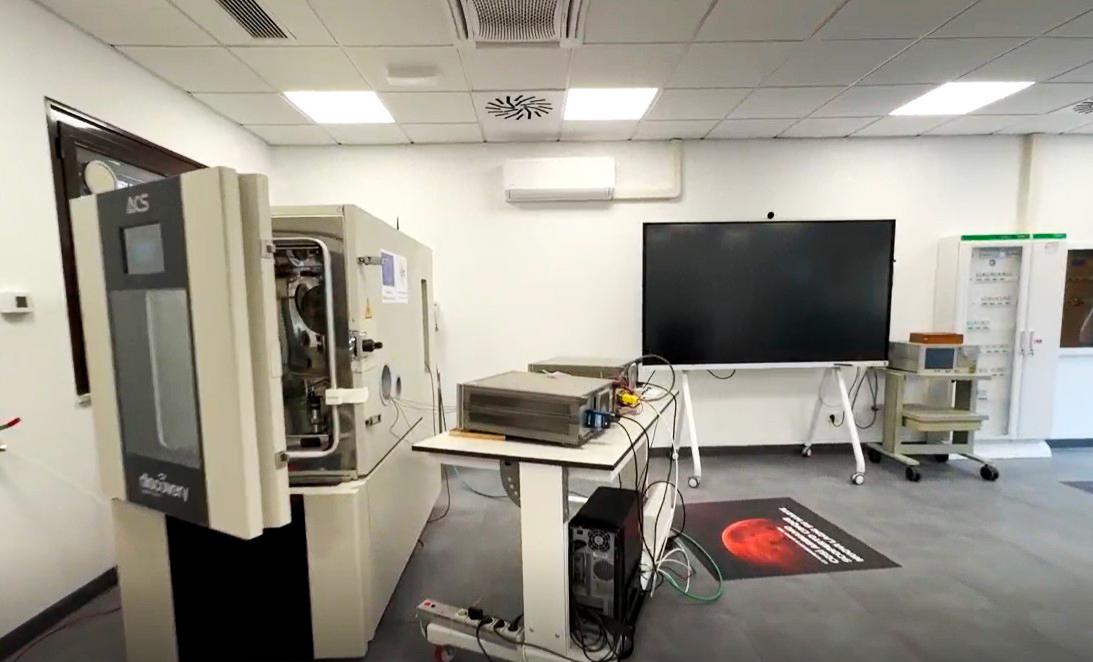
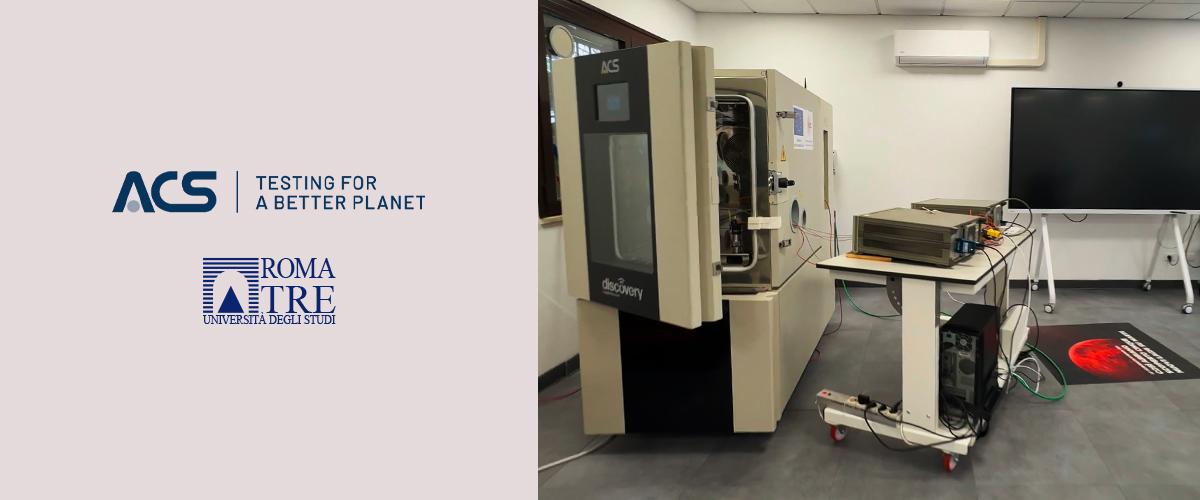
The new laboratory covers over 100 square meters and is equipped with advanced instruments, including our ACS Discovery My climatic chamber, which creates various types of synthetic ice by reproducing the environmental conditions of ice crusts, so that their dielectric properties can then be studied. " The laboratory is already fully operational - explains Prof. Pettinelli. We have completed the equipment testing phase and collected the first measurements, starting with pure ice as a reference for the study of icy moons. The initial results are very promising and will help us address crucial issues in ice physics, which are relevant both for planetary exploration and for understanding climate change on Earth."
Our chamber will also play a very important role in the future development of the project. In fact, there are plans to build an innovative experimental apparatus that will simulate the ice/ocean interface of the Europa satellite, which will be designed by SWIM Lab in collaboration with our company, thanks to our experience and global leadership in the field of environmental testing. The structure will include a large tank with an upper cooling and lower heating system, fully thermally insulated, equipped with inspection windows and twenty multi-level probes for monitoring dielectric properties.
The Laboratory was established as part of the ERC Advanced Grant 2023 SWIM – Surfing Radio Waves to Detect Liquid Water in the Solar System project, led by Prof. Elena Pettinelli, geophysicist at Roma Tre University.
SWIM is part of the long tradition of excellence in research of the group led by Prof. Pettinelli: back in 2018, thanks to data from the Italian MARSIS radar, the team identified the first stable body of liquid water under the south polar cap of Mars.
Elena Pettinelli is Full Professor of Earth Physics at the Department of Mathematics and Physics of Roma Tre University, where she is head of the Earth and Planetary Physics Laboratory. For almost 25 years, she has been conducting research in the field of planetary geophysical exploration, with particular regard to the electromagnetic characterization of planetary soil simulants and techniques for the analysis, inversion, and interpretation of signals acquired with subsurface radar.
Click here to watch the video filmed by Rai News, which visited UNI ROMA 3 and interviewed Prof. Pettinelli about this project in the opening segment.